Friday, 6 January 2012

Stay Stylish and Glamourous After 40

Hitting 40s is no reason to feel old, grumpy or frumpy. This is the time when most women have more free time to look after themselves as the children and husband are busy with their lives and need lesser attention. And this is also the time when our skin and figure need more attention. But most often, many women lose interest in looking good by the time they turn 40 and manage with boring and casual clothes!!

So, get out of the rut and create a smart and elegant wardrobe for yourself. If you keep yourself well-groomed, you will not only feel more confident but definitely happier. So do experiment with colour and new styles, modify them to match your age and body and go out to conquer the world! Do not forget to change your hairstyle and glasses for a makeover.

I love the styles of JoJami Tyler and Deborah Boland, who have been giving priceless tips as to how to look glamorous after 40. Their mantra for women over 40 is to get out of the comfort zone of predictable dressing and select clothes that are in sync with your personality. Here I present some simple styles featured in their site Fabulous After 40, which I feel almost all of us can try and create our unique style!

Three stylish looks with a simple striped Tee.


So which of these styles do you love?
Do try all the three for an image makeover.

Via

Do not be afraid to add colour and print to your wardrobe after a certain age, several fashion experts urge.


JoJamie looking chic


Yeah these colours will surely make you look younger as will the outfits.

Do not forget the accessories....


Incorporate an animal printed accessory


Use scarves to cover lines and wrinkles in your neck

Look seductive in a scarf and wide legged pants


The vibrant colours make Deborah's face glowing

Maxi dresses

Flowing maxi-dress


Legging style after 40

More leggings


So what are you waiting for?

Dress up with love and care but keep your age in mind. Spend time over yourself to look stylish and glam. You will surely invite appreciative glances!!

Tuesday, 29 November 2011

Story-Teller Surayia Rahman: Magic In Kantha Embroidery


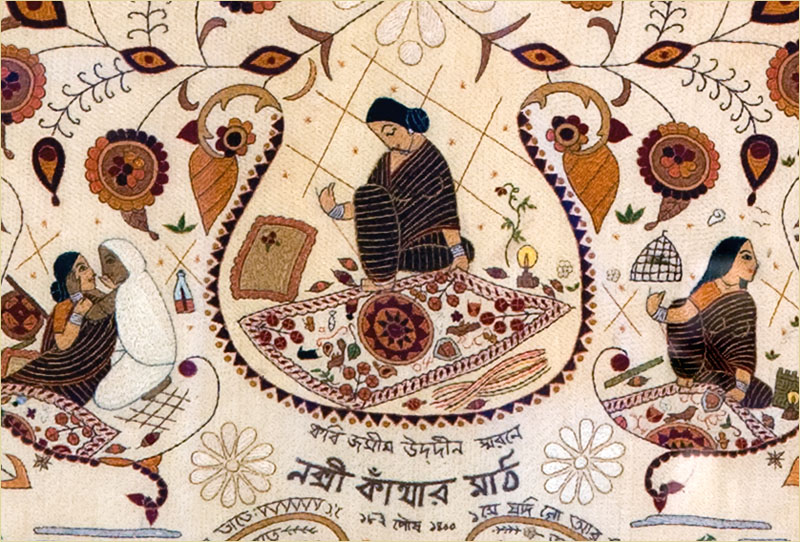
Kantha embroidery of Bengal is really unique as they showcase simple elements of nature and scenes from our day-to-day lives. Kantha embroideries are now found at almost every exhibition in various Indian states, unfortunately some are not of very high quality. Recently I came across the works of   artiste Surayia Rahman, who spent her younger days in India and settled in Bangladesh after her marriage. Her nakshi (derived from naksha meaning designs or motifs) kantha embroidered pieces are amazing pieces of art and showcase the daily lives of Bengali women and their involvement in household chores. Any woman would be able to identify herself with these activities like kitchen chores, chatting with friends, getting dressed, etc.

Now Surayia has started an organization called Arshi, where hundreds of women do the embroidery work under her guidance, to sustain her families.

Surayia Rahman, a self-taught painter, started kantha embroidery to give flights to her creative talent. Read here about her journey and how she got initiated into kantha embroidery in erstwhile Calcutta, that later helped her transformthe lives of scores of women in Bangladesh. Her tapestries are on display at several museums across the globe.


A Kind and Smiling Face


Suraiya guiding Women of Arshi. Pic: Anil Advani

Woman in Waiting

Conch Shells

Women in Blue

Womenfolk

Kitchen Scene


Elephant Ride

Life in Bengal
Procession

Colonial Times

Women Busy in Household Activities

Women Engaged in Kantha Work


Boat Race
Oil Painting by Surayia
A documentary and website on the life of Surayia Rahman are in the making. To support or sponsor the project or to locate Surayia’s work around the world, please contact cathy@kanthathreads.com or refer to www.kanthathreads.com.

       Kanthathreads

Tuesday, 1 November 2011

Vibrant collection of Bangladeshi designer Bibi Russell


Bibi Russell is a Bangladeshi fashion designer of repute and is involved in reviving the dying textile art of her nation. She herself is a fashion icon and draws attention with her individualistic, a bit bohemian, style of dressing.


With her vibrant colours, array of blings, including bangles and nose ring, her embroidered and tassled tribal bags, spectacles with multi-coloured frame, a gamchha-style checkered turban or stole-- she evokes strong reactions wherever she goes.  "Colours are part of Bengali life. They are our richness", she declares proudly. 

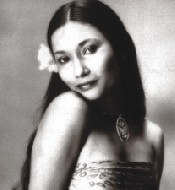
Bibi Russell in her younger days


What really strikes me about Bibi is her down-to-earth style, sans make-up or fancy hair-styles, despite several years of hobnobbing in the world of high-fashion.
 
Bibi Russell creation


She was a supermodel and had bagged modelling contracts from the house of international designers like Yves Saint Laurrent,  Karl Lagerfeld, Giorgio Armani and also with Vogue and Harper's Bazaar. Bibi was the first woman from Bangladesh to pursue her studies at the London School of Fashion way back in the '70s. And while modelling her collection at the graduation event, she was spotted by the designer houses and offered the contracts.


A model in Bibi Russell creations


Bibi Russell's Gamchha collection


Since then Bibi Russell has made lots of friends and contacts and later made her passion into her vocation and got involved with Bangladesh crafts persons to promote textiles and handicrafts of the nation to the world.


Vivacious Bibi Russell


Her collections are bold in their hues 


She also designed these bright bangles made of water hyacinth

Supermodel-turned designer

5'10'' tall Bibi, during her modelling career spanning from 1986-1992, had walked down the ramp alongside Naomi Campbell and Claudia Schiffer as well as was the face for high-profile brands like Chanel, BMW, Toyota, Kodak etc. on the pages of Vogue, Cosmopolitan, Harper's Bazaar and others. 

Bibi at a fashion show


Later, on a mission to revive the dying art of Bangladesh, Bibi expanded her work to India, Cambodia and Vietnam. Whether it's her sarees or ready-to-wear collection-- her catch-phrase are natural fibre and vibrant colours. Her collection also includes bags, shoes, stoles and bangles. She first showcased her collection at Kolkata Fashion Week in 2009.

Though brought up on the other side of the Indian border, she says, “I grew up with the culture of Tagore and the philosophy of Gandhi; I grew up with my feet rooted firmly in the subcontinent and I saw beyond the poverty.”


Bibi is currently promoting Bangladeshi fabrics and handicrafts for domestic and international markets under the slogans ‘Fashion for Development and Positive Bangladesh’. So far she has provided employment to thousands of weavers and artisans and has presented exhibitions in Europe, most of which were supported by UNESCO.

She says that all her fabrics are hand-woven and natural. "I do not use synthetic materials. The fabrics I use are khade, cotton, silk, gamchha (Bengali check-designed washcloth), jute, tribal textiles, recycled fabric and the opulent Jamdani, once used by the royalty.


She has gained international recognition and has been honoured with `Honorary Fellowship' of London Institute in 1999, title of ‘Designer for Development’ by the UNESCO in 1999, the title ‘Artist for Peace’ by the UNESCO in 2001 and the Peace Prize 2004 by the United Nations Associations of Spain.


She, alongwith the director's wife Nilanjana, recently designed the costumes for Goutam Ghosh's bengali film "Maner Manush" based on the life of Lalan Fakir.